Experimental Seminary: Life and Death in Museum Conservation
Abstract :
The experimental seminary with a group of art students questions the modes of conservation of objects produced in the past but also engages in a reflection on our modes of production of artworks in the present. What exactly are we preserving? Where do we preserve? For whom? The group will visit museum storages and exhibitions, enter in conversation with curators, leave the closed spaces of interiors and work in collective gardens and develop forms of artistic intervention themselves.
-
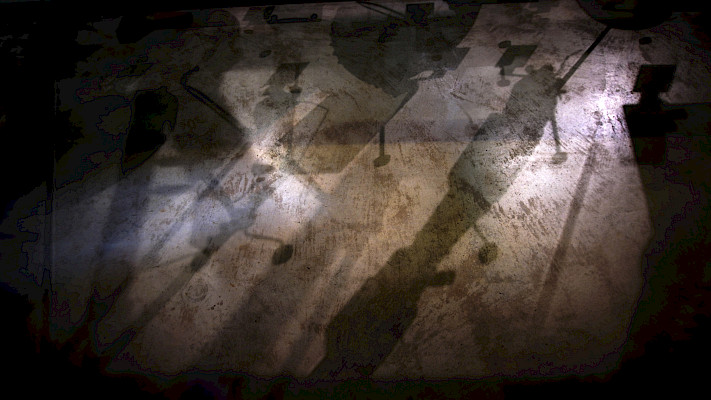 Image: Alejandra Riera, 2022.
Practical :
1/10/2022 - 31/12/2022
These experimental sessions are part of the seminary Questionning Ecologies, conceived by Alejandra Riera, at Ecole nationale supérieure d'arts de Paris Cergy (ENSAPC)
With : Ricardo Liong A Kong, Jumana Manna, Ariane Theveniaud, Alexandre Girard-Muscagorry, La semeuse, and unexpected guests
Collaborator : Lotte Arndt
read more
In a sequence from Matthias de Groof's documentary film Palimpsest of the AfricaMuseum (Belgium, 2019), which follows the large-scale renovation of the Royal Museum for Central Africa in Tervuren (2013-2018), workers clean the empty display cases. Wearing white protective suits, breathing masks and nitrile gloves, they can only access the closed spaces, which for more than a century contained objects like time capsules, if they wear extensive personal protective equipment that protects them from toxic dust. Behind the glass of dioramas and display cases, Congo artifacts were treated with biocides for decades to prevent material decay and insect damage. These treatments, administered to extend the material life of the artifacts, have for some sedimented into the materials and can deploy agentivity. This toxic survival can then interfere with the present and future uses of the artifacts, prevent tactile practices and require the implementation of protective measures." [Lotte Arndt in "Toxic Survivals in Colonial Collections"]