Conservation practices in colonial collections and their afterlives
-
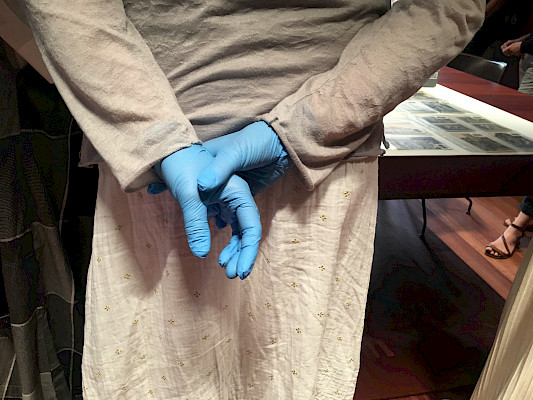 Conservation practices, Research Image, Musée du Quai Branly, Paris, 2022 (Lotte Arndt).
read more
My research interrogates the aporia of preventive conservation in ethnographic and natural history museums. It takes the simultaneity of the rise of conservation as a science and the peak of colonial collecting in the end of the 19 century as its point of departure, and accords a particular attention to the « age of chemistry » (Unesco 2014) in the post-war-era. As places dedicated to conservation, museums promised the minimisation of decay of the objects, and obtained « life span prolongation » through the isolation of artifacts from living environments, both culturally and materially. Today, demands for restitution and transformative practices question museums as vectors of imperial modernity, and are confronted with the lasting alteration of artifacts by conservation policies, especially in the case of the presence of biocides.
The project examines toxicity in museum collections in the context of postcolonial power asymmetries, the afterlives of biochemical treatments, and the intersections of claims for environmental and cultural justice. By bringing together archival material, historic and present day images, interviews, artworks, and contributions from artists, museum professionals, and theorists from different geographical contexts, the research outlines potential scenarios for future museum practices beyond Eurocentric notions of collecting, conserving, and exhibiting.